Repotting Houseplants Without Regret: A Calm Checklist of Common Mistakes and Simple Fixes
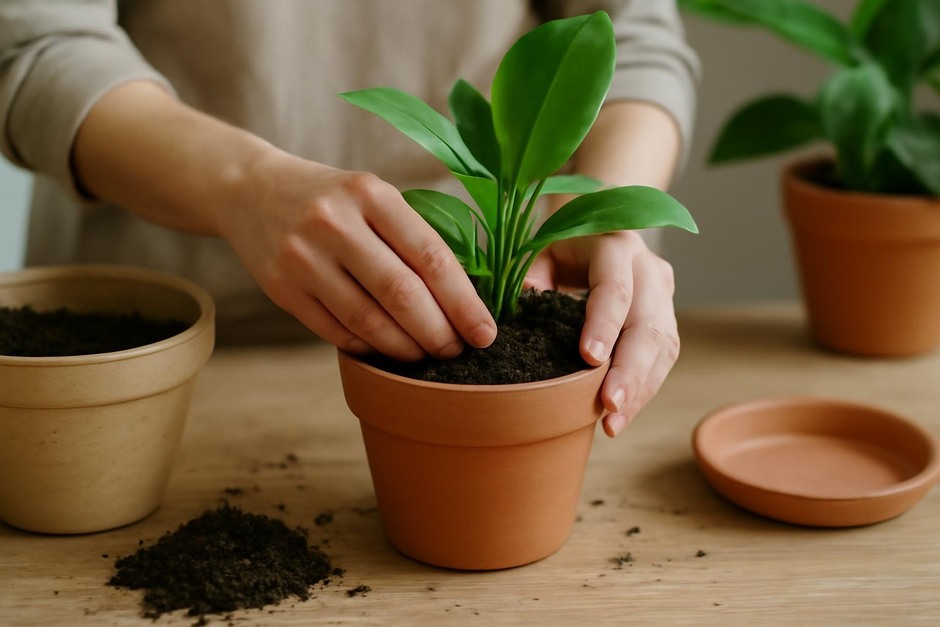
There’s a quiet satisfaction in sliding a familiar plant into a new pot: fresh soil, a little rearranging, the small ceremony of caring for something that occupies our time and attention. But repotting can also go a bit sideways — too-big pots, compacted roots, soggy soil — and the result is a plant that looks fine one week and sulks the next. Below is a calm checklist of common mistakes and gentle corrections to help your next repotting feel intentional rather than fraught.
1. Choosing the Wrong Pot Size
Common mistake: picking a pot that’s much larger than the plant’s root ball in hopes of giving it room to grow. The problem: a big pot holds a lot of soil, which retains moisture and increases the risk of root rot before roots have expanded to fill the space.
- Correction: Choose a pot 1–2 inches wider in diameter than the current root ball for small pots, or about 2–4 inches larger for bigger specimens. This gives room to grow without trapping excess moisture.
- Checklist:
- Measure the widest part of the root ball.
- Prefer incrementally larger pots rather than jumping several sizes.
2. Overlooking Drainage and Soil Choice
Common mistake: assuming any pot and garden soil will do. Many houseplants need well-draining mixes and a pot with an effective drainage hole. Dense soil compacts, water pools, and roots get smothered.
- Correction: Use a pot with a drainage hole and a suitable potting mix. For many houseplants, a mix that includes components like coarse perlite, bark, or grit improves airflow and prevents compaction.
- Checklist:
- If the pot has no drain hole, either add one (if feasible) or create a drainage layer of coarse material and be conservative with watering.
- Match the soil to the plant: succulents need fast-draining grittier mixes, ferns prefer richer, moisture-retentive mixes, and tropicals like a balance of organic matter and aeration.
3. Rough Handling of Roots and Incorrect Planting Depth
Common mistake: aggressively teasing or pruning roots, burying the crown too deep, or leaving the plant planted too high. Each can stress the plant unnecessarily.
- Correction: Be gentle when loosening a root-bound plant. Lightly tease apart circling roots only enough to encourage new outward growth. Plant so the top of the root ball sits just below the rim of the pot and the crown (where stem meets roots) remains at or slightly above soil level.
- Checklist:
- Inspect roots for rot (mushy, black) and trim only those clearly dead.
- If the plant is tightly root-bound, use a clean knife to slice a few vertical cuts in the root ball to encourage spreading rather than pulling it aggressively apart.
- Firm the soil gently around the root ball — avoid compacting it hard.
4. Aftercare Missteps: Watering, Light, and Waiting
Common mistake: overcompensating after repotting with heavy watering, or conversely, withholding water too long. Another frequent error is moving the freshly repotted plant to an entirely new light environment immediately.
- Correction: Water modestly to settle the soil—enough to moisten but not soak. Place the plant in a similar light level to its previous spot for a week or two to reduce shock, gradually adjusting as needed.
- Checklist:
- After repotting, wait a few days before fertilizing; fresh potting mixes often contain nutrients and fertilizer can stress recovering roots.
- Check soil moisture regularly; resist the urge to water on a schedule — water when the top inch or so feels dry for many plants, or follow the specific needs of the species.
- Observe the plant for signs of stress (droop, yellowing) but allow a couple of weeks before assuming the worst; many plants take time to reestablish.
Small rituals help: a clean potting area, a trayed layer to catch stray soil, a cup of tea while you work. Repotting is less about precision and more about mindful corrections — noticing what the plant needs and avoiding the impulse fixes that can do more harm than good.
Measured conclusion
Repotting needn’t be an anxious task. By choosing a properly sized pot, prioritizing drainage and the right soil, treating roots gently, and tending the plant with tempered aftercare, you reduce common sources of stress for both you and your plant. Think of repotting as a small window: a brief season of adjustment that, with a few calm corrections, leads to steadier growth and a healthier houseplant for the months ahead.