The Doorway Effect: Four Mini Exercises for Noticing the Architecture Around You
There is a small, persistent surprise built into most days: every time you pass through a doorway you move between two designed worlds. That threshold is a compact lesson in proportion, material, and intention. If you look closely, a single doorway can teach you how a house or a street is put together. The trick is to slow down and give that one element a few brief, structured looks.
1. Scale and Proportion: Use Your Body as a Ruler
Principle: Architecture communicates scale through relationships—how high a lintel is relative to your shoulder, how wide a frame is against your outstretched arms, or how recessed a door sits compared with the surrounding wall.
Mini exercise:
- The Shoulder Test. Pause at five doorways in a short walk. Note how your shoulder aligns with the door handle and lintel. Is the doorway taller than you, or does it feel compressed? Record one adjective: airy, snug, imposing.
- Measure with Steps. Count the number of steps it takes from the sidewalk to the threshold. One step feels different than three; the rhythm tells you about intended approach and formality.
Why it helps: These small measurements anchor abstract design ideas in your body. Scale becomes a habit to sense, not just a vague impression.
2. Material Conversation: Notice What Touches the Hand
Principle: Materials are the vocabulary of a building; thresholds show how different materials meet and what the builder prioritized—durability, warmth, or economy.
Mini exercise:
- Run your fingers along five different doorframes (or imagine doing so if touching is discouraged). Note temperature, texture, and any repair marks. Is it painted wood, raw metal, stone, or composite?
- Pick one threshold and list three adjectives describing the transition: abrupt, softened, framed. Try to infer why that choice was made—weather protection, aesthetic, or historical preservation.
Why it helps: Paying attention to material edges trains you to read an often-overlooked layer of architecture where practical concerns and aesthetic choices meet.
3. Light and Shadow: Read the Threshold as a Small Theater
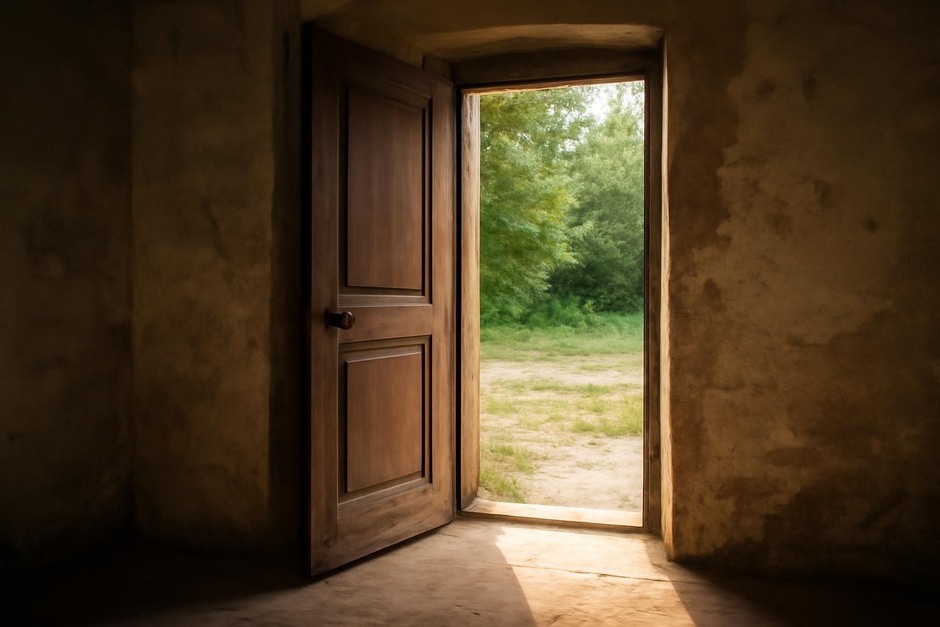
Principle: Light shapes perception. The way a doorway is lit—backlit, shaded, or highlighted—can change the sense of welcome and secrecy.
Mini exercise:
- Stand for a minute in the morning, midday, and late afternoon at the same doorway (if you can). Note how the mood shifts as light moves across jambs and the sill. Which moment feels most inviting?
- Photograph the same threshold at one time of day and, without editing, look at the photo later. What did the camera pick up that you did not notice in the moment?
Why it helps: Small temporal studies reveal how architecture performs over time. Light is one of the easiest design tools to miss because it constantly changes.
4. Joinery and Detail: Read the Hand of the Maker
Principle: Details expose craft. Nail patterns, dovetails, the tightness of a joint, or a tasteful trim reveal whether a space was mass-produced, thoughtfully renovated, or lovingly maintained.
Mini exercise:
- Pick a nearby door you pass often and examine one detail for five minutes: a hinge, a threshold plate, or the meeting of plaster and wood. Sketch it quickly or write a sentence about what the detail suggests about care and time.
- Compare two doors—one that looks new and one that shows wear—and list the differences in fastening, finishing, and evidence of repair. Try to tell a small story about the occupants from those signs.
Why it helps: Details are where theory becomes practice. Training your eye to read joinery and repairs turns ordinary walking into a practice of historical curiosity and respect.
Measured Conclusion
These exercises take only a few minutes each but they change how you inhabit and remember places. The doorway becomes a repeated subject, like a still life you revisit over weeks. By attending to scale, material, light, and detail you learn a four-part grammar for reading architecture—one that is portable and forgiving. Try one exercise a day for a week. Over time, the habit of noticing will extend beyond doorways to cornices, stoops, and window sills, and the city will feel less like scenery and more like a conversation waiting to be heard.